The Buried Truth? The 1965 Lanting 蘭亭 Debate and the Politics of Authenticity
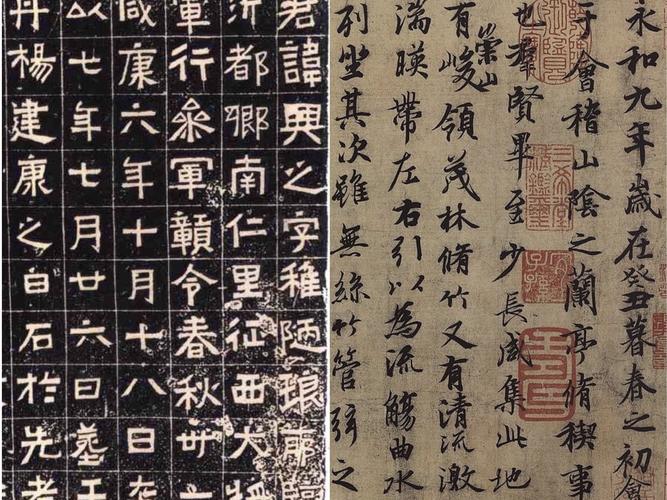
In January 1965, an Eastern Jin dynasty tomb was discovered in the suburb of Nanjing. As the epitaphs showed, it belonged to Wang Xingzhi (王興之) and his wife Song Hezhi (宋和之), who were distant relatives of the celebrated calligrapher Wang Xizhi (王羲之). The tomb is located in an area that historically had deep links to the Wang clan, and the epitaphs were dated not long before the legendary Lantingxu. Because of the drastic stylistic discrepancy between the epitaphs and Lantingxu, this discovery triggered a heated debate over the latter's authenticity involving many experts of the time, most notably Guo Moruo (郭沫若), Gao Ershi (高二適) and Shang Chengzuo (商承祚). However, it was quickly eclipsed by a bigger controversy: a year later, the history play Hai Rui Dismissed from Office (海瑞罷官) nominally triggered the Cultural Revolution.
Like the Hai Rui case, the Lanting debate was heavily politicized. But unlike the former, the latter has faded into relative oblivion. And yet, its intellectual implication remains significant, because it became a showcase of both old and new methods in historical research, which turned out to be not quite compatible with each other. In this talk, my goal is not so much about forming a judgment of Lantingxu's authenticity than addressing the problem of methodology: why do different approaches, each legitimate in their own ways, lead to contradictory conclusions? How did politics intrude into and shape the debate? What kind of lesson can be learnt from it?
* * *
A recording of this talk is available for viewing, for access please write to understandingauthenticity@gmail.com. Thank you!