Critical Chinese Copying as an Interrogation of the Hegemony of Modernity
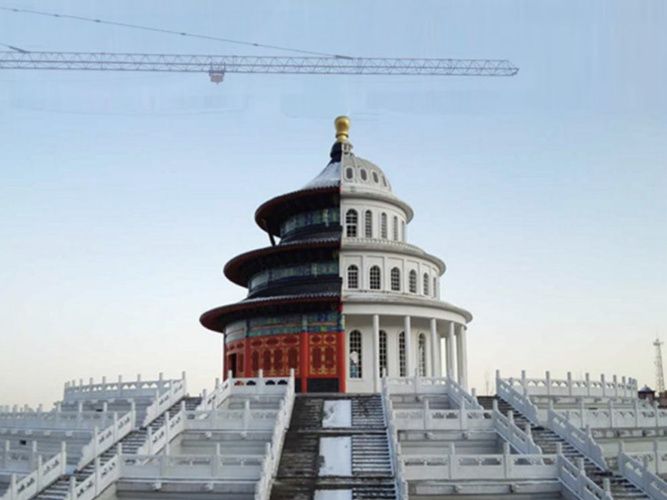
This paper explores the contemporary Chinese architectural mimicry phenomenon with its changing history, and the spatial and temporal dynamics embedded in “copying from the West” and “copying from the past”. Chinese copying with its rich tradition is now receiving biased judgment grounded in the dominant modern Western ideologies of “authenticity” and “originality”. However, my paper argues “authenticity” and “originality” are cultural constructions, or invented traditions. Two case studies of recent Chinese architectural mimicry, “Jackson Hole” and “W-town” in Beijing bring us to the formation process of core cultural values and contemporary Chinese identity, which are embedded in the collisions between the mimesis tradition and creativity, and between the Western influences and its reciprocation under a Chinese context in the contemporary media-driven moment. Through copying, multiple temporalities have been created and thus challenge a linear historical narrative. My thesis aims to challenge the existing dominant modern western theories on copy/mimicry, especially UNESCO's universal values, which have made great difference to preservation practices in China today. The research ultimately questions how the Chinese copycat environments interrogate the “hegemony of modern preservation theories and practices”, to further question the notion of “modernity” in its general sense.